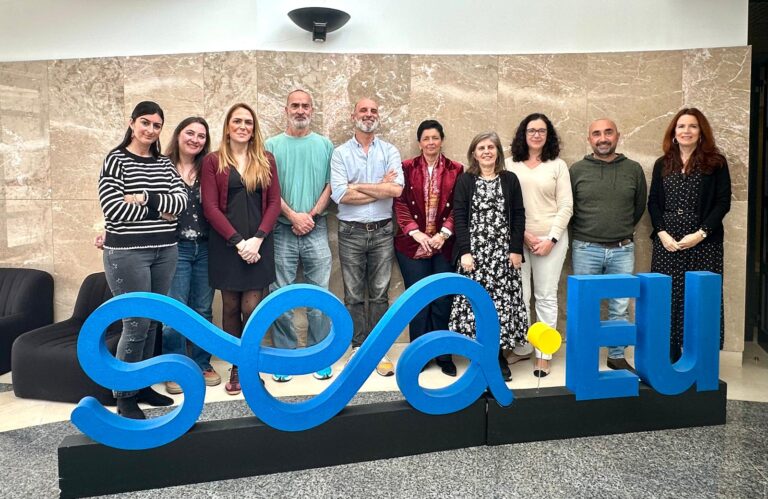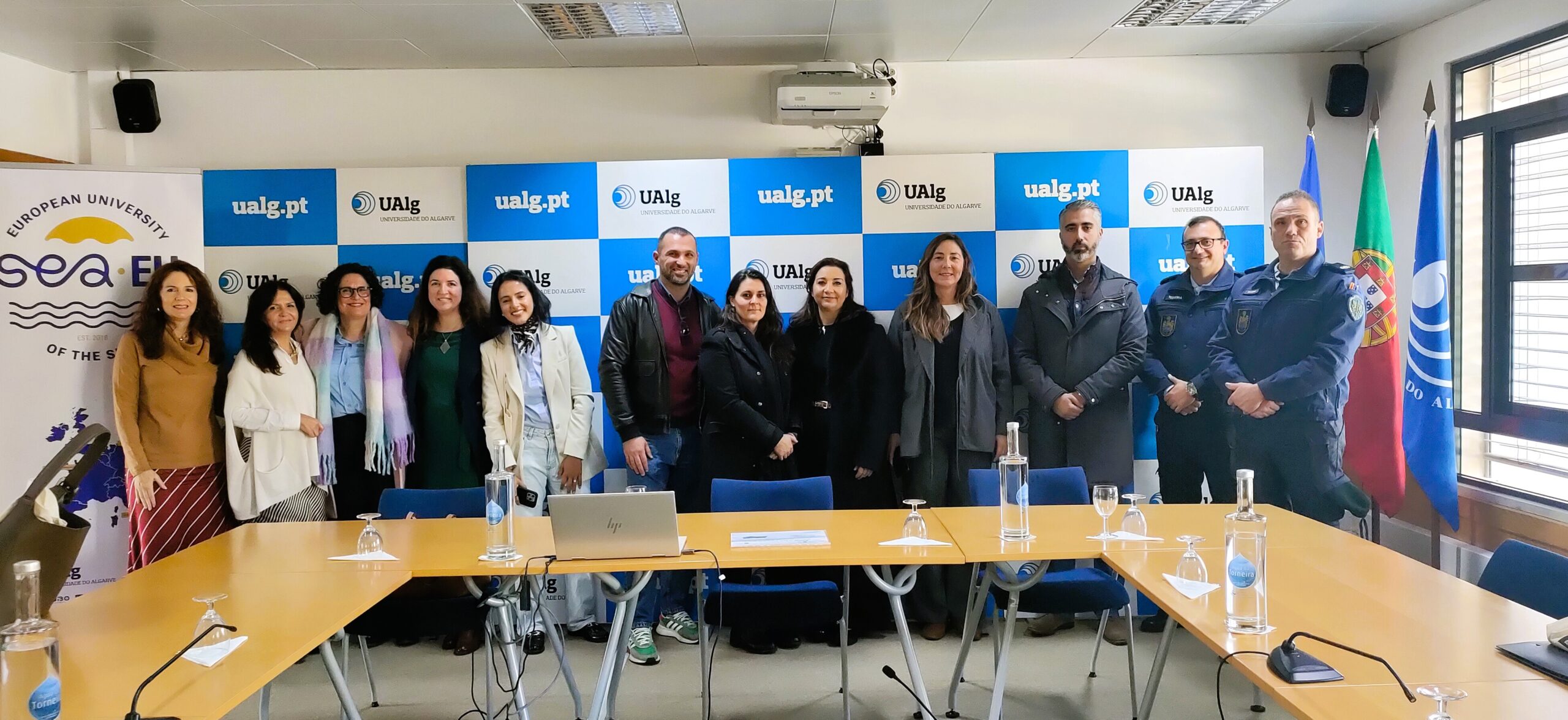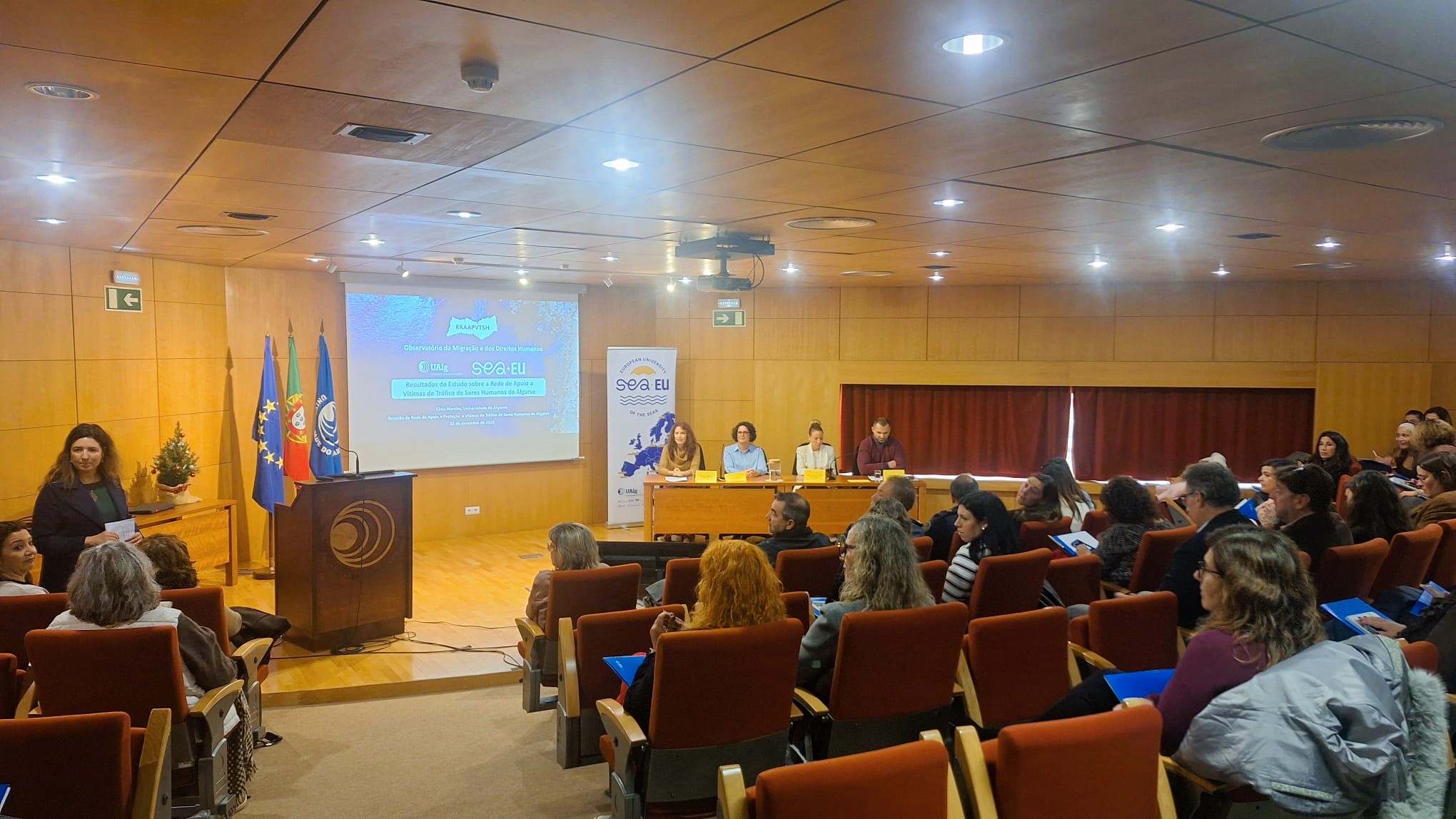
On 5 December 2025, the SEA-EU Observatory of Migration and Human Rights (OMHR) played a central role in the organisation of a meeting of the Algarve Network for the Support and Protection of Victims of Human Trafficking, hosted by the University of Algarve. The event brought together 56 participants from a wide range of public bodies and civil society organisations committed to the prevention, identification and protection of victims.
Held at the Penha Campus, the meeting reflected the Observatory’s mission to promote social justice, human rights and institutional cooperation by connecting academic expertise with policy development and action on the ground. Through this initiative, the SEA-EU Alliance reinforced its commitment to addressing complex societal challenges through coordinated, multi-level responses.
During the morning session, the Restricted Committee of the EME Network — comprising 12 representatives, including network coordinators, law enforcement authorities and municipal officers — met to analyse emerging challenges and to align strategic and operational responses.
The afternoon session included the formalisation ceremony of the Restricted Committee and a welcome address by the Pro-Rector for SEA-EU, Patrícia Pinto. In her intervention, she highlighted the role of the SEA-EU Observatory on Migration and Human Rights as a platform for inter-institutional cooperation, joint knowledge mobilisation and the co-creation of evidence-based solutions to strengthen prevention, protection and the dignification of victims of human trafficking.
The programme also featured a presentation by Professor Cátia Martins on research developed in collaboration with the University of Algarve, focusing on the prevention and combating of human trafficking. This was followed by an intervention by Maria Salomón on the changes introduced by the new Immigration Law and their operational implications, as well as a presentation on the work carried out by the Multidisciplinary Specialist Teams for Assistance to Victims of Trafficking.
The meeting was attended by representatives from organisations including AIPAR – Association for the Protection of Girls and Families; APF – Portuguese Family Planning Association; APAV – Portuguese Association for Victim Support; Faro City Council; the National Republican Guard; the Criminal Investigation Police; Social Security; the António Aleixo Foundation; the Algarve Local Health Unit; and the Commission for the Protection of Children and Young People, alongside other members of this regional cooperation network.
Overall, the initiative highlighted the strategic role of the SEA-EU Observatory of Migration and Human Rights in strengthening links between research, public policy and professional practice, contributing to more coherent and effective responses to human trafficking at regional and European levels.