Daniel Manzoni de Almeida is a Junior Chair Professor at the INSPE de Bretagne (Teacher Training Institute) and the CREAD Research Centre (Centre for Research on Education, Learning, and Didactics) at UBO working in science and health education from a perspective of diversity, inclusion, and integration in teacher training.
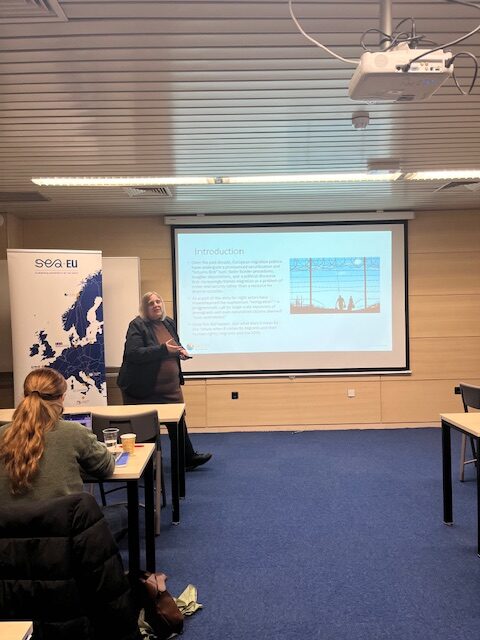
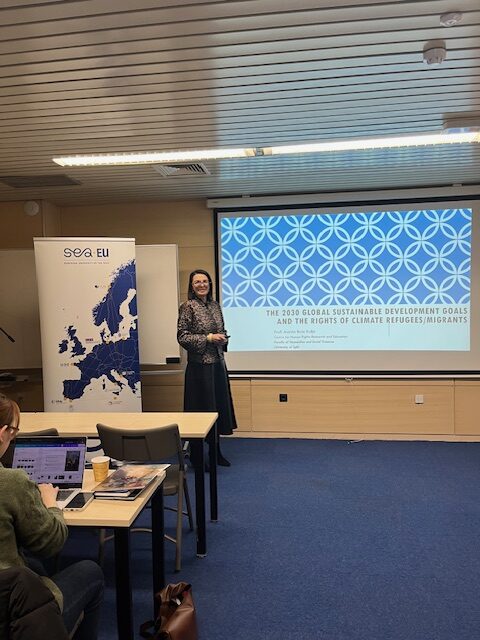
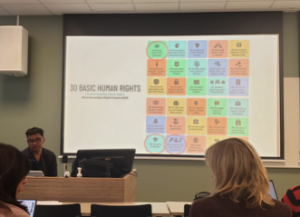 During the seminar, he presented the findings of his research from the past ten years, in which he applies inquiry-based teaching methodology combined with critical pedagogy. In the following interview, he explains how this international seminar, has impacted his vision of collaborative science.
The programme of the seminar emphasised artificial intelligence and digital transformation. Did you come away with any new concrete tools or methods?
Yes, there was a very rich discussion on these approaches. The essential thing is to combine scientific literacy with digital literacy to prepare both teachers and students to meet 21st-century challenges. Artificial intelligence and digital transformation can be valuable allies in teacher training, particularly for central issues in science, health, and the environment. In the coming months, I plan to develop teacher training proposals that integrate these dimensions synergistically, with an emphasis on sustainable practices and “green marks,” strengthened by international collaborations that broaden perspectives and experiences.
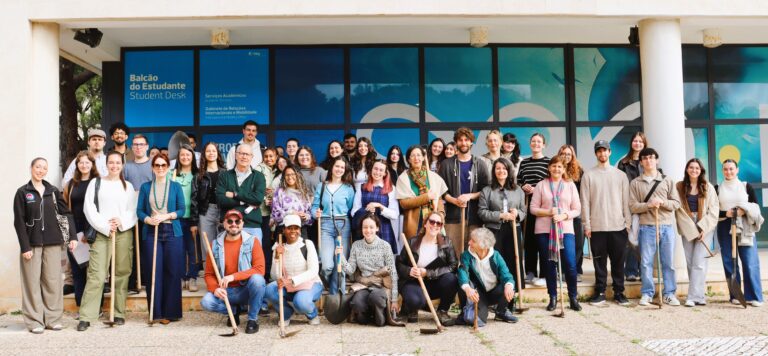
Beyond the lectures, you exchanged ideas with colleagues from across Europe from the SEA-EU alliance. What does this bring to your vision of higher education?
Recently, I was selected as a SEA-EU Ambassador to begin building a science teacher training project focused on critical pedagogy. The seminar was essential in making these proposals a reality by strengthening the possibilities for international scientific and pedagogical collaboration.
What would be your main argument to convince a colleague who might hesitate to be away for a week for this type of event?
 Scientific knowledge is not produced in isolation; it is born from interaction between researchers, the exchange of experiences and projects. A week in an environment like this can accelerate and focus our projects and ideas much faster than email exchanges. Science is made by humans: it thrives on relationships, conversations, and diverse multicultural experiences. One of the great challenges of the 21st century is to build a humanised and accessible science, capable of engaging with society and responding to real-world problems.
An in-person seminar humanises science, strengthens empathy, and transforms our role as scientists into something more meaningful and effective in the world.
What do you see as the true added value for a teacher or researcher in being part of an alliance like SEA-EU?
The great value of SEA-EU lies in the opportunity to build a scientific network that is diverse, inclusive, multicultural, and responsible towards the planet. Participating in an international network like this allows for the exchange of experiences, methodologies, and perspectives, enriching both teaching and research. Rather than producing knowledge in isolation, we are invited to think about science collectively, integrating different cultures, social realities, and environmental responsibilities.
By collaborating in international environments, we have the opportunity to train and inspire critical, conscious, and engaged citizens, making science a living, ethical force that contributes to the transformation of society and, of course, to changing realities. This collaboration strengthens the capacity to innovate ethically and sustainably, training professionals capable of meeting global challenges with awareness and empathy.
A final word for those wishing to get involved in future SEA-EU opportunities?
 Taking part in the opportunities offered by SEA-EU deeply enriches both scientific and personal life. These spaces offer diverse and multicultural experiences, allowing for a unique exchange of knowledge, methodologies, and perspectives. By engaging, we have the chance to broaden our worldview, strengthen international collaborations, and build learning networks that transcend disciplinary and cultural borders. More than just academic opportunities, these experiences inspire human growth, empathy, and a broader understanding of the role of science and education in society.