SEA-EU actively contributed to the EUNICoast Capacity Building Programme, held on 28–29 January 2026 in Le Havre, with a keynote addressing institutional transformation within European University Alliances.
The online keynote “From Expectations to Reality: Institutional Transformation through SEA-EU” formed part of Module 4, Institutional Transformation – From Change to Cultural Shift. Marcela Iglesias and Fernando Pérez led the session and shared how SEA-EU has turned early expectations into concrete institutional change.
First, the speakers explained how the Alliance has moved beyond project-based cooperation. Instead, SEA-EU now drives long-term structural and cultural transformation across its partner universities. They based their analysis on SEA-EU’s experience as a consolidated European University Alliance coordinated by the University of Cádiz.
Next, Marcela Iglesias and Fernando Pérez focused on the factors that make this transformation possible. They addressed governance models, internal alignment and change management. In addition, they showed how partner universities integrate SEA-EU priorities into their institutional strategies.
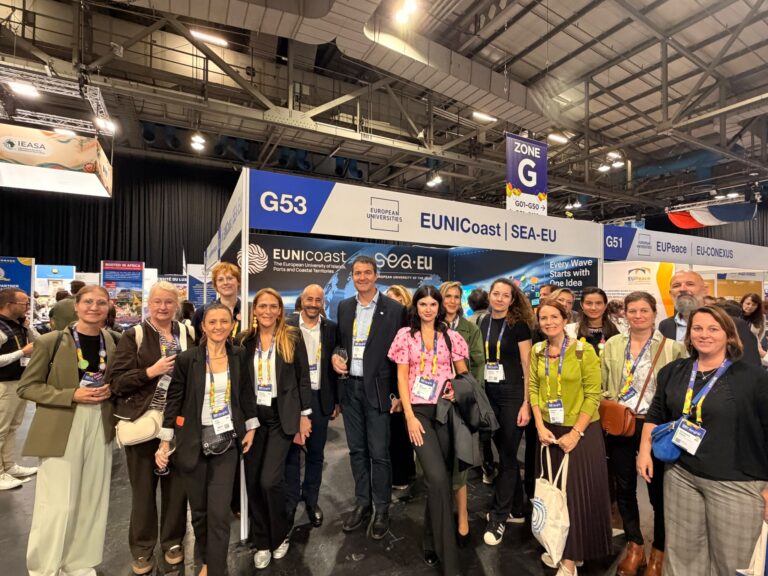
At the same time, SEA-EU also joined the programme in person. Giovanna Ápice (University of Naples Parthenope), Edyta Hoffmeister (University of Gdańsk) and Joško Markić (University of Split) represented the Alliance on site. Their participation reinforced SEA-EU’s commitment to peer exchange and inter-alliance cooperation.
The Capacity Building Programme, organised by EUNICoast, brought together university leaders, managers and practitioners. The programme aimed to strengthen capacities in European policy frameworks, institutional transformation, cross-cultural communication and transnational leadership. Petra Frent, EUNICoast Alliance Manager, and Morgane Chevé, Vice-President for Institutional Affairs and Major Transformations at Université Le Havre Normandie, opened the event.
Through this contribution, SEA-EU continues to promote knowledge sharing among European University Alliances. Moreover, it strengthens the European Universities Initiative as a driver of systemic change in higher education.