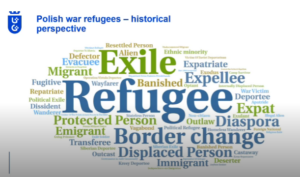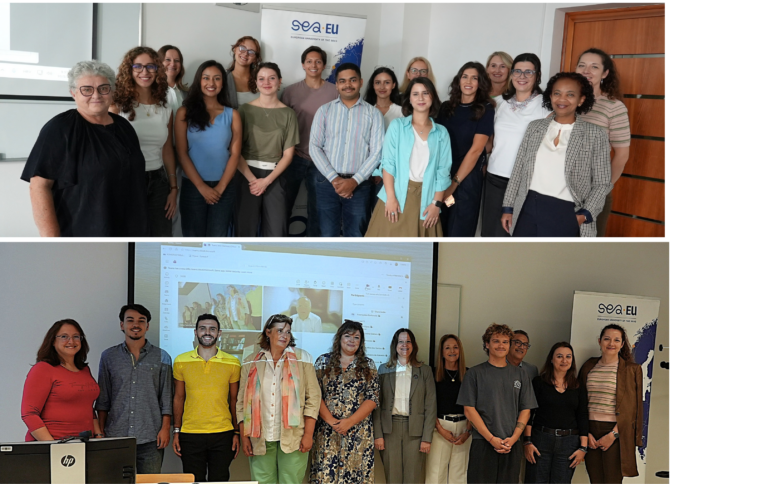
The latest seminar of the Observatory, titled “Reframing Contemporary War Refugees in Poland through Historical Lenses”, was presented by Rafal Raczynski and Anna Mazurkiewicz. The session offered a broad historical reflection on war refugees in Poland, situating contemporary displacement processes within a long-term perspective that spans from the eighteenth century to the present.
The discussion began with an overview of forced migration in the Polish historical context. It highlighted episodes such as the Bar Confederation in the eighteenth century, which already generated significant political and military displacement. During the nineteenth century, national uprisings against imperial powers led to harsh repression, including deportations from Polish territories to Siberia, used as a form of political punishment and imperial control.
A key element of the analysis was the so-called Great Emigration, which referred to the mass exile of Polish political, intellectual, and military elites after failed uprisings, particularly the 1830–1831 insurrection. Most of these exiles settled in France, especially in Paris, where they formed influential communities of political émigrés and developed important networks that shaped Polish political thought and national identity in exile.
The seminar then moved on to the twentieth century, focusing on the First and Second World Wars. These conflicts produced massive forced population movements, complex migration routes, and networks of human trafficking. The speakers emphasized how global wars fundamentally reshaped patterns of displacement and asylum across Europe.
Attention was also given to the case of Greek refugees between 1948 and 1950, who fled the civil war in Greece and were resettled in various European countries, including those within the Eastern Bloc. Later, the discussion turned to refugees from the Chechen wars in the 1990s and 2000s, which took place in a more institutionalized European asylum framework, although still marked by uneven implementation and challenges.
In the final part of the seminar, contemporary dynamics were addressed, particularly the observed decline in social support for migrants and refugees. This trend was linked to structural factors such as access to employment and the need to learn the host country’s language. Integration was presented as a key challenge, with emphasis on the importance of rapid labour market inclusion.
However, the seminar also carried a hopeful message. The speakers underlined that there is an ongoing effort to develop policies aimed at normalizing migration processes, framing migration not as a permanent crisis but as a structural and recurring phenomenon. These approaches seek to improve asylum governance and promote more effective and humane integration strategies.
Overall, the seminar provided a comparative historical lens that connects past and present experiences of forced migration. It highlighted how the history of exile and displacement in Central and Eastern Europe offers valuable insights for understanding contemporary refugee challenges, while also pointing towards more sustainable and inclusive policy solutions.