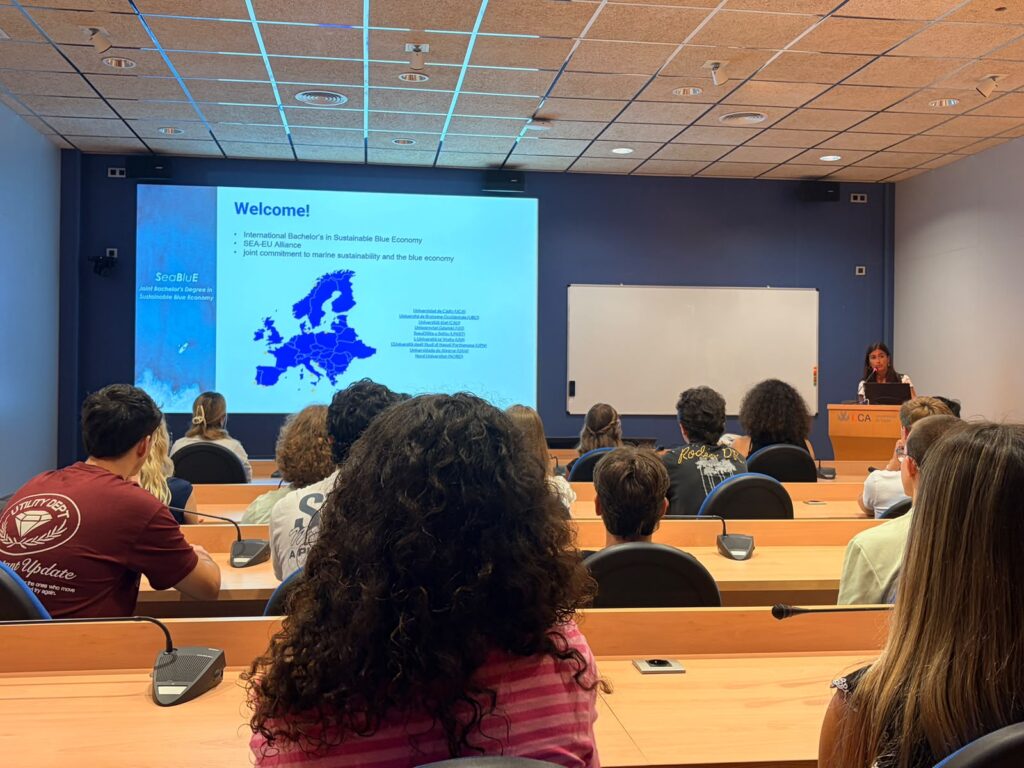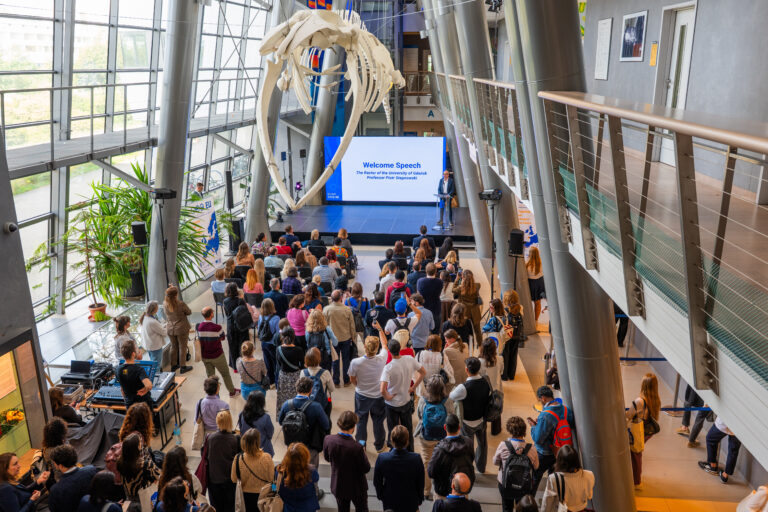
Students starting the Joint Bachelor’s Degree in Sustainable Blue Economy have come together in Cádiz, Naples and Gdańsk for a shared welcome session marking the beginning of a new academic year.
A new generation of SeaBluE students has begun its journey across Europe. The Joint Bachelor’s Degree in Sustainable Blue Economy (SeaBluE) officially welcomed its new cohort on 16 September with a joint session connecting students and academic teams from the University of Cádiz, the University of Gdańsk and the Parthenope University of Naples. The session marked the beginning of a new international experience in which students will combine academic training, mobility and intercultural learning while addressing some of the major challenges facing our oceans and coastal communities.
At the University of Cádiz, the welcome was opened by Alejandro Centeno, who encouraged students to make the most of a degree designed to provide them with the skills and knowledge needed to contribute to sustainable economic growth while respecting ecological limits. He also highlighted the role that this new generation can play in areas such as marine conservation and marine policy.
Representatives from Naples and Gdańsk joined the session online, turning the opening morning into a shared experience across the three universities hosting students at this stage of the programme.
From the University of Gdańsk, the Dean of the Faculty of Management, Angelika Kędzierska-Szczepaniak, highlighted the international and innovative nature of SeaBluE and its focus on sustainability, oceans and the responsible management of resources. Addressing the students directly, she encouraged them to meet people, exchange ideas, learn from different perspectives and embrace the challenges ahead. “The future we’ve often talked about is not something that begins in 10 or 20 years. For you, it starts today,” she told the new students. The Rector’s Delegate for Academic Affairs at Parthenope University of Naples also welcomed the new students on behalf of the university’s academic community, highlighting the institution’s multidisciplinary profile and its longstanding connection with the sea.
Students at the centre
One of the most personal moments of the morning came when students across the different locations introduced themselves and explained why they had chosen SeaBluE. Despite their different nationalities and backgrounds, many common motivations quickly emerged: protecting oceans and marine biodiversity, responding to climate change, understanding the sustainable use of marine resources, exploring the blue economy and experiencing an international learning environment. Their stories reflected precisely the multidisciplinary character of SeaBluE, which brings together environmental sciences, economics and management to approach the future of seas and coastal communities from different perspectives.
Marina Murillo, Academic Coordinator of SeaBluE, introduced the academic journey ahead. During the three-year programme, students will have the opportunity to work with peers and academics from the participating universities and explore areas including sustainability, marine ecosystems, renewable ocean energy and coastal economies.
The programme follows an intensive academic structure, with courses organised in blocks combining teaching, independent work and assessment. The first semester begins with Marine Ecosystem and Biodiversity, coordinated at UCA by Carmen Morales, followed by Ocean Functioning and further courses throughout the semester.
Paula Lechuga, Local Coordinator of SeaBluE at the University of Cádiz, also presented the practical and academic support available to students. This includes the SEA-EU Buddy System, language support and services addressing wellbeing and specific needs, alongside local university resources. From Naples, Stefania Corsaro, Local Coordinator of SeaBluE at Parthenope University, presented the university and some of the expertise that its academic community brings to the programme, including research related to green ports, port competitiveness and logistics, digital twins and entrepreneurship.
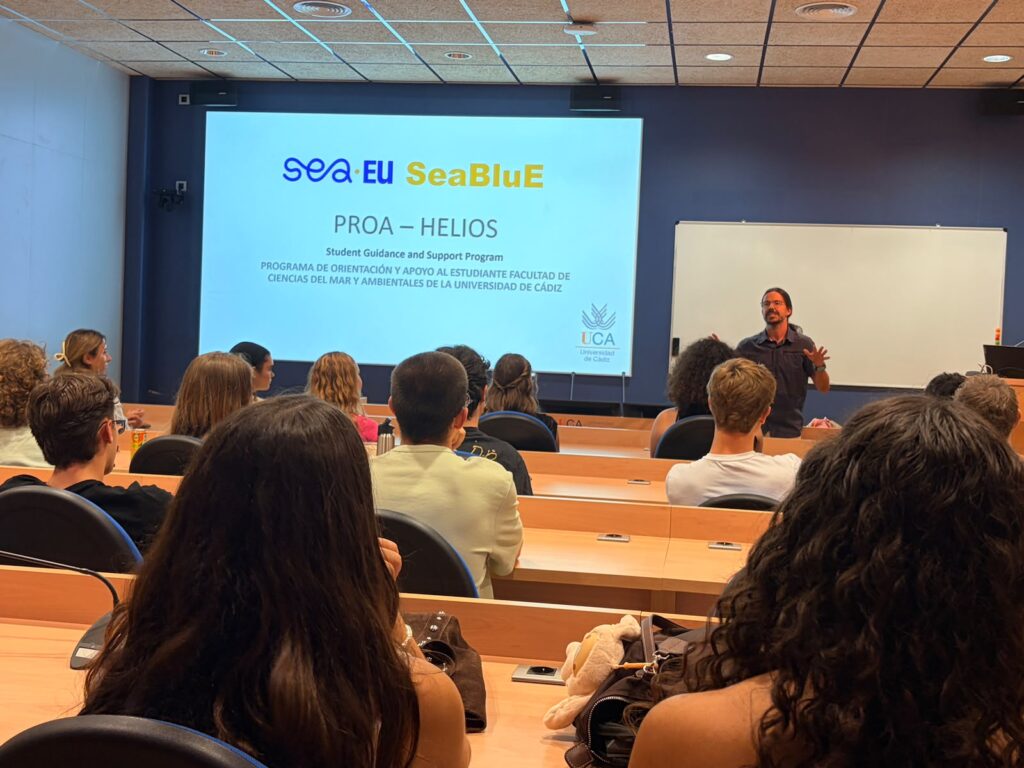
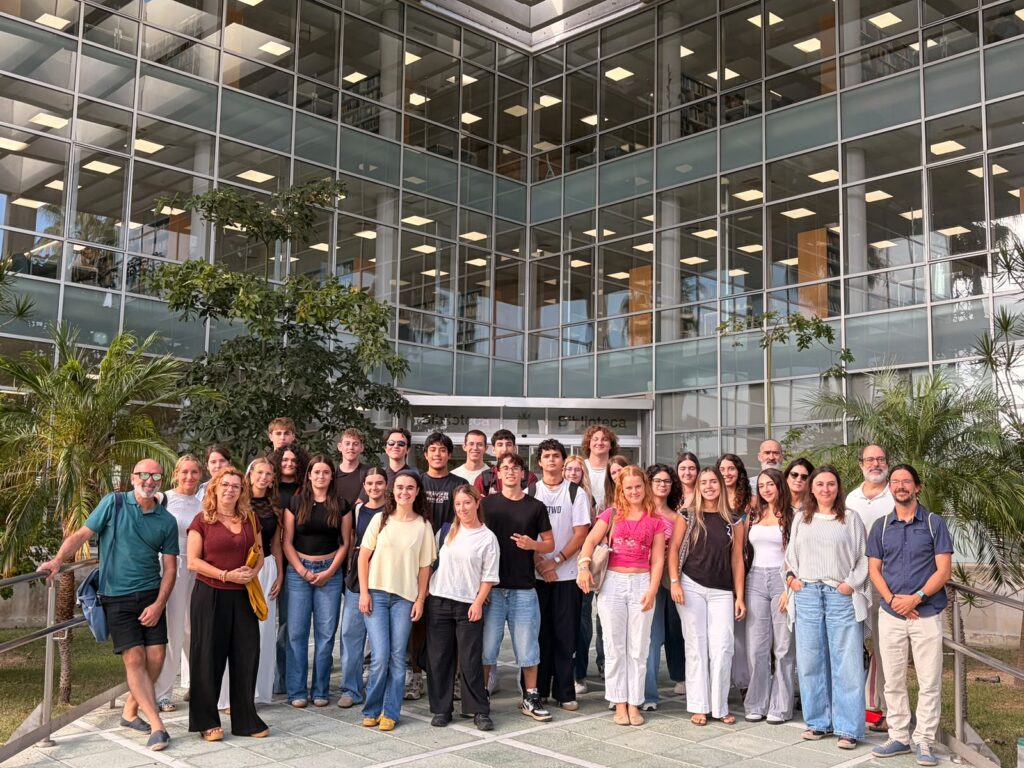
Following the joint international session, the students based in Cádiz continued their introduction to university life with a presentation of PROA–HELIOS, the guidance and student support programme of the Faculty of Marine and Environmental Sciences. The morning concluded with a visit to the Puerto Real Campus Library and a group photo, before students continued with a guided tour of the campus facilities. The programme will extend throughout the coming days. Students will discover the Cádiz Campus and the city itself, including its Phoenician archaeological heritage and a sightseeing tour, before joining the University of Cádiz welcome activities for incoming international students.
This second SeaBluE cohort also marks another step in the consolidation of one of SEA-EU’s flagship joint educational initiatives. While the new students begin their first year, the cohort that started the programme in Cádiz in 2025/26 has now moved to the University of Algarve to continue its second year, putting into practice the mobility-based model at the heart of the joint degree.
For the newest SeaBluE students, that European journey has now begun.