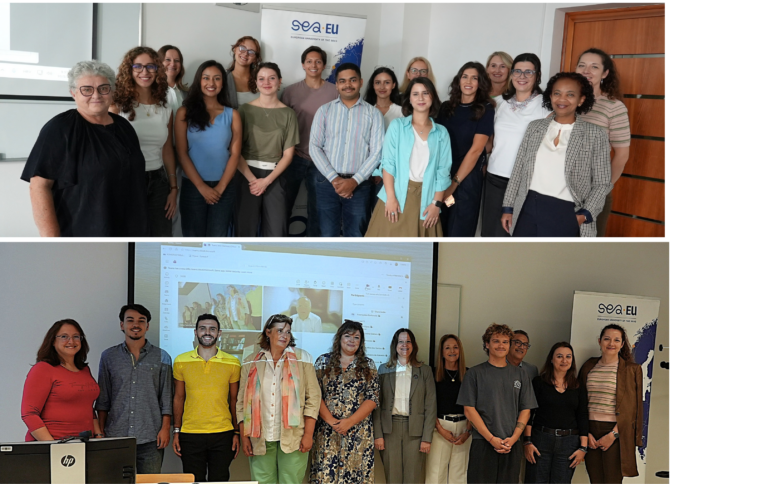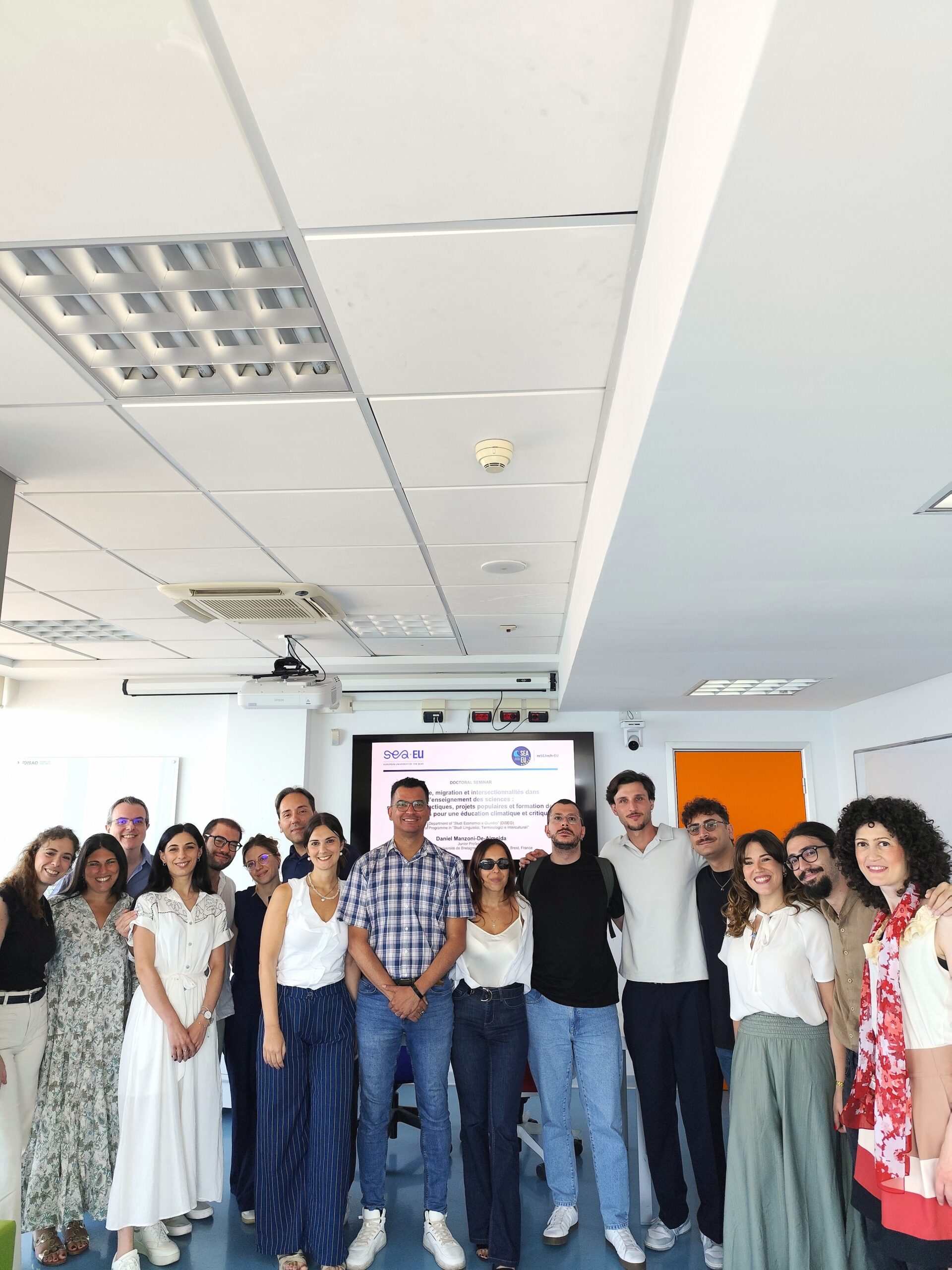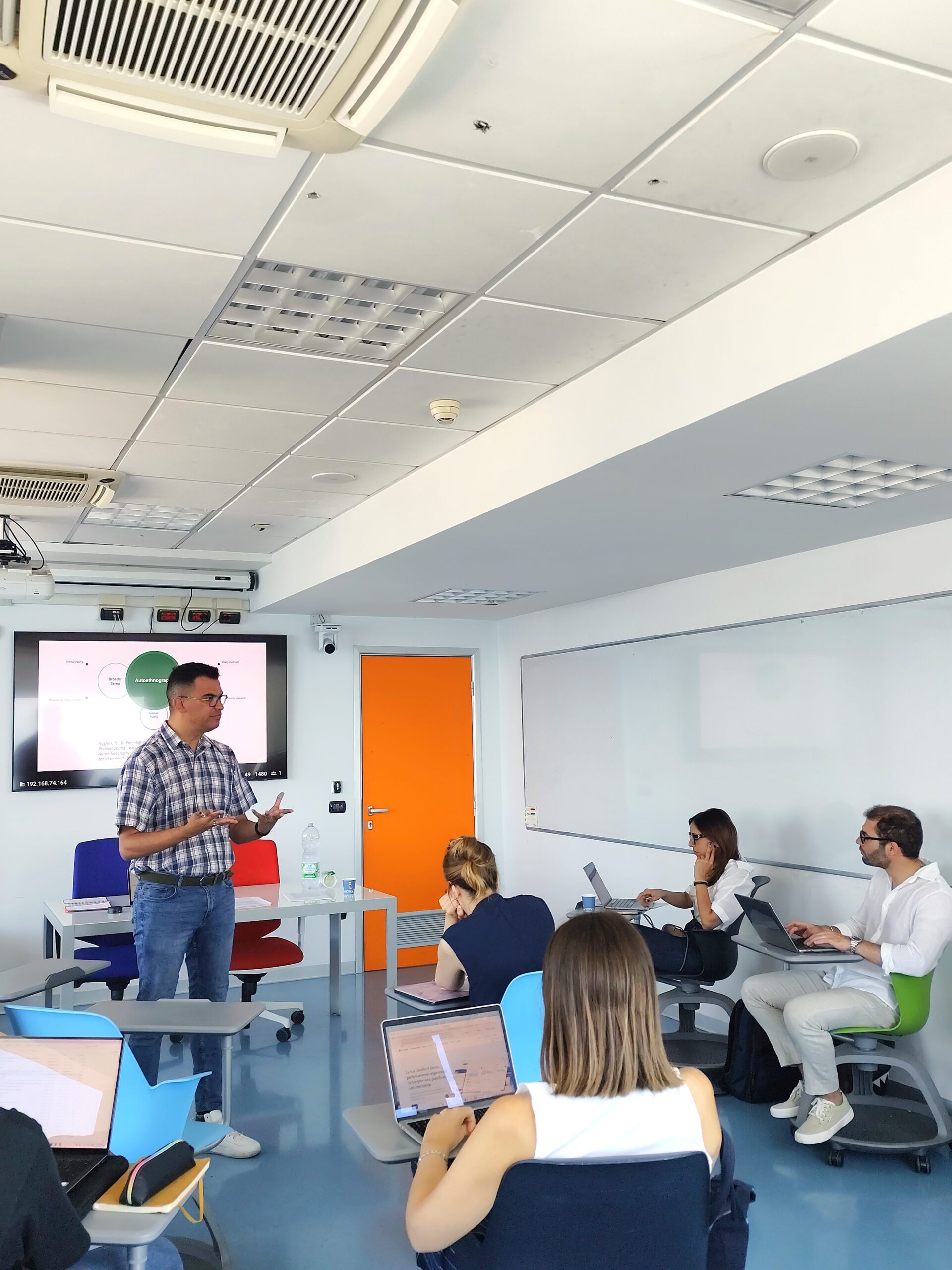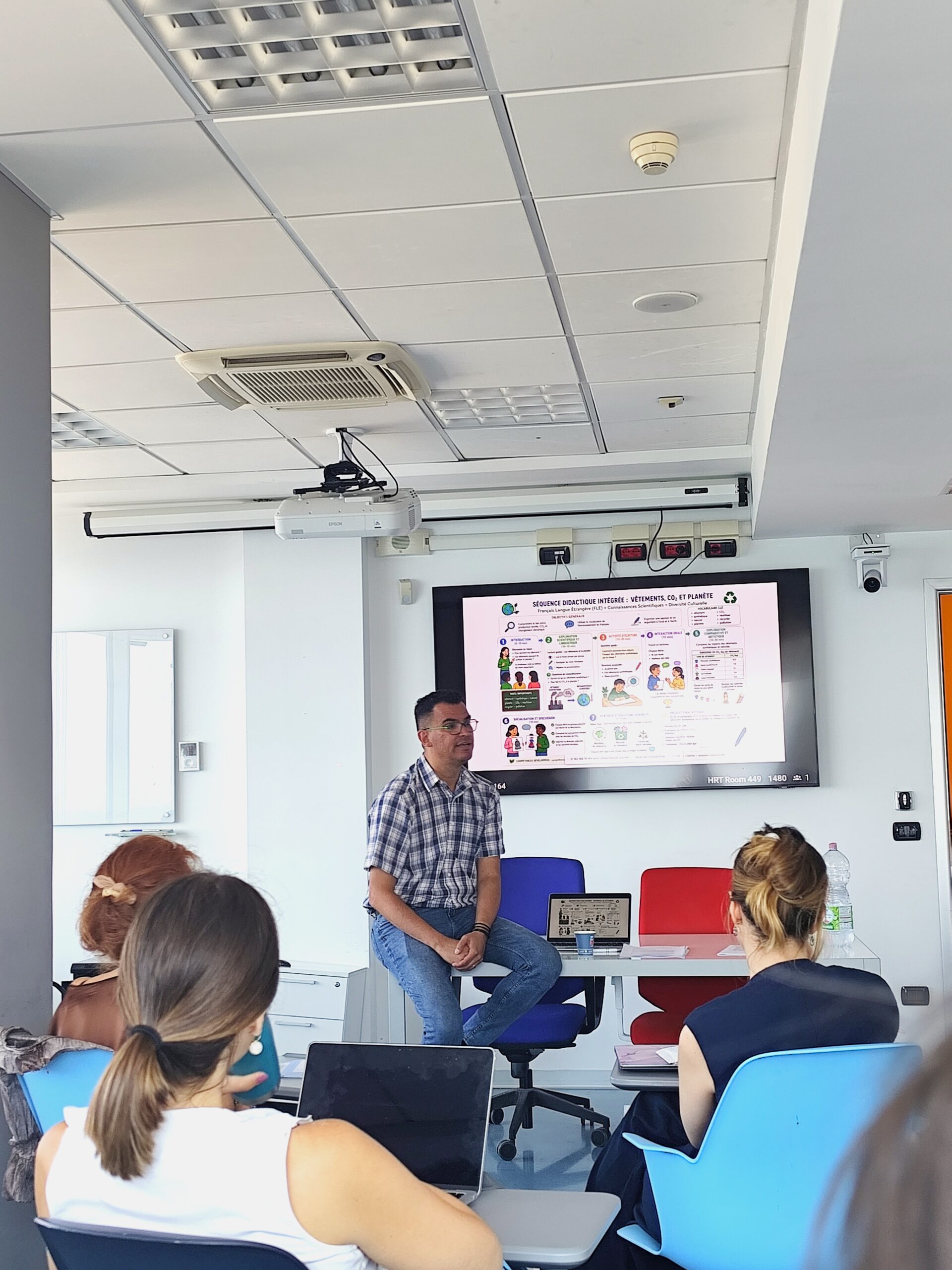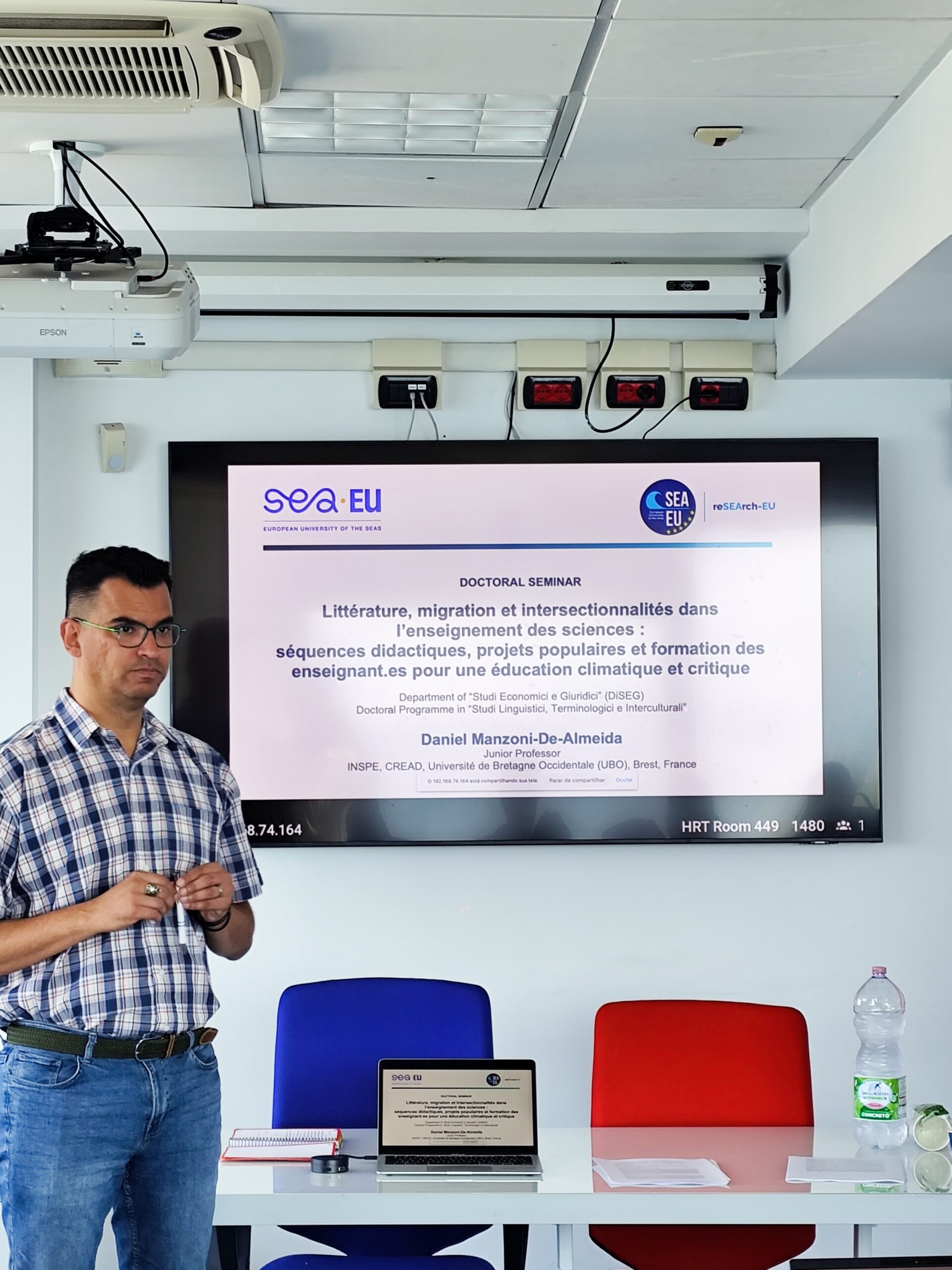
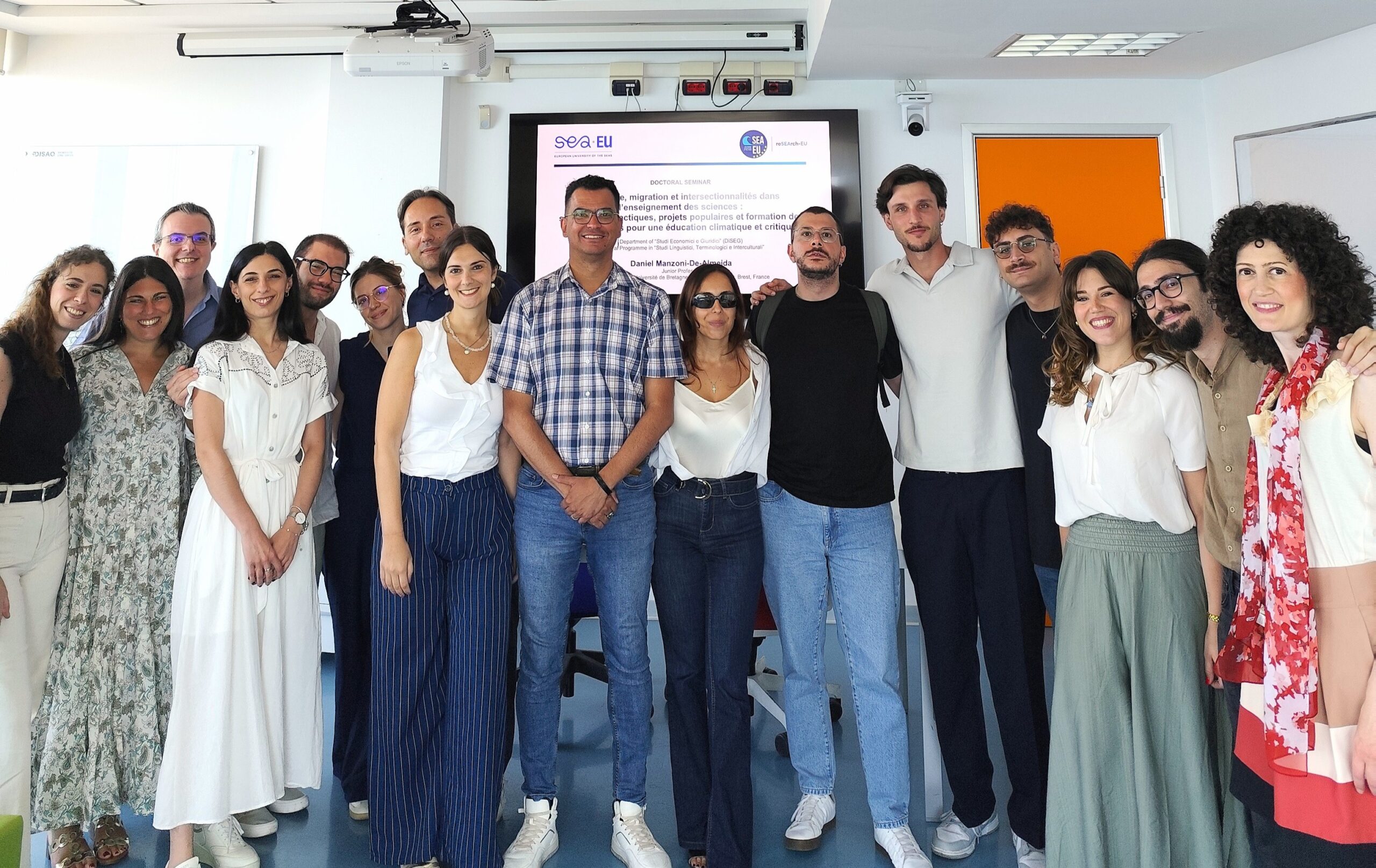
The Department of Engineering (DISEG) at the Parthenope University of Naples recently hosted a seminar titled “Littérature, migration et intersectionnalités dans l’enseignement des sciences” (“Literature, Migration and Intersectionality in Science Education”), bringing together scholars from four SEA-EU universities to explore how language, literature and social justice intersect with the teaching of science. The event formed part of the Citizen Laboratory for Educational, Climatic, and Inclusive Transition, a project funded through the “ReSEArch-AmbassadEUrs” programme of the SEA-EU Alliance.
The seminar united researchers from a transnational academic network spanning Italy, France, Norway and Croatia. Representing the Parthenope University of Naples was Silvia Domenica Zollo, joined by Daniel Manzoni-De-Almeida from the Université de Bretagne Occidentale in France. Heidi Katarina Harju-Luukkainen contributed from Nord University in Norway, while Jelena Nakić represented the University of Split in Croatia. Together, the four scholars examined linguistics, literature, migration and intersectionality as tools for rethinking how science is taught in today’s classrooms.
At the heart of the initiative lies an ambitious goal: to develop a European model for teacher training centred on climate and ocean education. The project is built on four pillars — scientific literacy, social and climate justice, inclusion, and active citizenship — reflecting a broader ambition to equip educators with the skills needed to address pressing environmental challenges through a socially conscious lens.
What sets the project apart is its genuinely interdisciplinary architecture. Rather than treating science education as a self-contained field, the initiative draws together biological and environmental sciences, ocean literacy, corpus linguistics, terminology studies, literature, teaching methodology and educational technology. This convergence of disciplines is designed to train both teachers and students to critically engage with contemporary ecological issues, moving beyond rote learning toward a more reflective, socially aware approach to science.
By weaving together linguistic and literary analysis with environmental science, the Citizen Laboratory project offers a fresh blueprint for European education – one where climate literacy and social inclusion advance hand in hand.