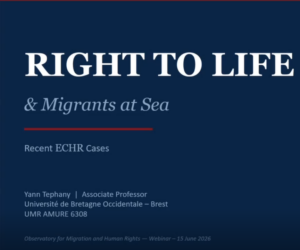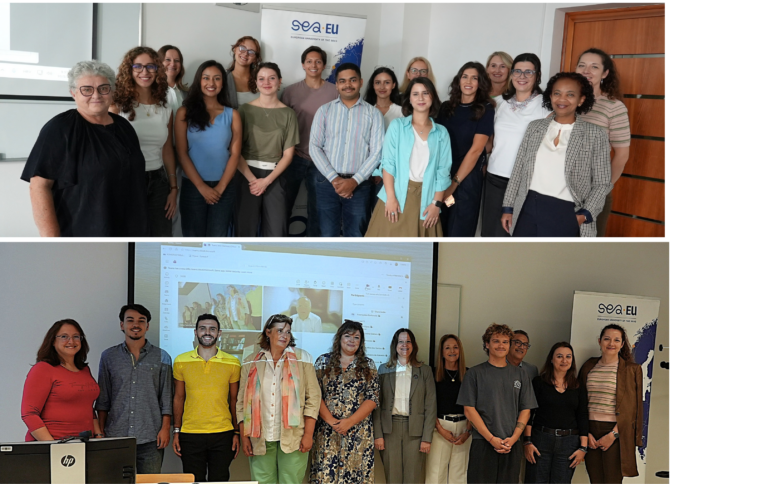
The Observatory of Migration and Human Rights recently hosted an online seminar entitled “Right to Life and Migrants at Sea: Recent ECHR Cases”, organised by the University of Cadiz and delivered by Yann Tephany from the University of Brest. The event brought together participants from six of the nine universities that form part of the Observatory’s network, fostering academic exchange and collaborative discussion on contemporary human rights challenges.
The seminar explored recent case law of the European Court of Human Rights concerning the protection of the right to life in the context of maritime migration. Particular attention was given to the positive obligations incumbent upon States in search-and-rescue operations and to the legal standards applied by the Court when assessing whether national authorities have acted with the required level of diligence in situations involving persons in distress at sea.
Among the cases discussed was a significant case concerning a migrant vessel in Greek waters. Following a distress call, the Greek maritime rescue authorities initiated a search-and-rescue operation; however, the vessel was not located. Subsequently, three women from Afghanistan and Iraq reached the shore and provided testimony regarding the events that had unfolded at sea, giving rise to legal proceedings before the European human rights system.
Drawing on this case, Yann Tephany examined the claims brought before the European Court of Human Rights by the survivors, who argued that the Greek authorities had failed to take all reasonable measures to safeguard the lives of those on board. The Court’s analysis was presented as particularly instructive, as it focused on the information available to the authorities at the time of the distress call and on whether that information should have alerted them to the possibility that the vessel was sinking.
The seminar provided valuable insights into the evolving jurisprudence of the European Court of Human Rights and highlighted the legal and humanitarian challenges associated with the protection of migrants at sea. It also offered participants an opportunity to reflect on the scope of State responsibility in maritime rescue operations and the continuing relevance of the right to life within contemporary migration governance.