Portugal is often described as one of Europe’s most monolingual countries: one state, one nation, one language. However, that does not disclose the full scope of history. Lisbon in the Age of Discoveries, a port city crowded with African, Asian and European voices, can hardly have been monolingual. Today, in the northeastern border villages, in the country’s deaf communities, and in the speech of a handful of small towns, Portugal still shelters a quieter linguistic diversity, one that has only recently begun to receive legal recognition and sustained academic attention.
For a university alliance built on the idea of Europe’s seas and margins as places of exchange, these languages deserve closer attention. They show how borders, isolation, and migration shape how people speak, and what it takes to keep a small language alive.
Mirandese: Portugal’s second official language
Mirandês lhéngua mirandesa) is the only language besides Portuguese with legal recognition in Portugal. Parliament approved the Mirandese Law on 17 September 1998, and it took effect as Law 7/99 on 29 January 1999. That is why 17 September is now celebrated as Mirandese Language Day.
Mirandese is not a dialect of Portuguese. It belongs to the Astur-Leonese family, a relative of Asturian and Leonese across the Spanish border and is spoken in Terra de Miranda in the far northeast of Portugal, mainly in the municipality of Miranda do Douro. Isolated from the rest of that family by a national frontier, it developed its own written standard. The ethnographer José Leite de Vasconcelos first described it to scholars in the 1880s and called for its protection from 1882 onwards.
Recognition did not guarantee survival. Estimates of speaker numbers vary widely, from older claims of 10,000–15,000 to a recent study conducted by the University of Vigo counting approximately 3,000 speakers in Terra de Miranda. In fact, the same 2023 study warned that the language could disappear around 2050 if nothing changed.
On a more positive note, in March 2025 the government created a Mission Structure for the Promotion of the Mirandese Language, based in Miranda do Douro with an annual budget of €500,000. Its commissioners took office in February 2026 with teacher training and teaching materials as priorities. In September 2026, first-year pupils in Miranda do Douro received the first-ever Mirandese school textbook, the start of a series meant to cover every year of schooling. Although Mirandese remains an optional subject, local associations report that around 80% of pupils in the town’s schools choose it.
Barranquenho: a language made by the border
In Barrancos, a small Alentejo town pressed against the Spanish frontier, people speak Barranquenho. It grew from centuries of contact between southern Portuguese and the Andalusian and Extremaduran varieties of Spanish across the border. It is a mixed or contact language: neither Portuguese with Spanish words nor Spanish with a Portuguese accent, but something with its own sound and grammar.
The town classified Barranquenho as intangible heritage of municipal interest in 2008. Local leaders have since pushed for national recognition, arguing that it should be taught at schools. Barranquenho is a reminder that borders do not only divide languages; they also create new ones.
Portuguese Sign Language and other voices
Portugal’s most secure minority language is not spoken at all. Portuguese Sign Language (Língua Gestual Portuguesa, LGP) was written into the Constitution in 1997, which commits the state to protect and value it as a cultural expression and a means of access to education. The date of that recognition, 15 November, is now National Portuguese Sign Language Day. LGP has its own grammar, emerged from nineteenth-century deaf education in Lisbon, and today supports bilingual schooling and degree programmes in interpreting.
Other voices sit further from the spotlight:
- Minderico, the old trade jargon of the textile town of Minde, near Alcanena (central Portugal), now the focus of local revival efforts.
- Calão, the variety shaped by Portugal’s Roma communities, mixing Romani vocabulary with Portuguese grammar.
- Migrant languages, above all Cape Verdean Creole, alongside Brazilian Portuguese, Ukrainian, Hindi, Nepali and other languages that now cohabit Portugal’s cities and farm regions, including the Algarve, bringing the cultural practices that are part of their cultural identity. An example is the Cape Verdean festival Kola San Jon, from Lisbon’s Cova da Moura neighbourhood, which entered Portugal’s national inventory of intangible heritage in 2013.
The European dimension: a charter signed, not yet ratified
Portugal signed the Council of Europe’s European Charter for Regional or Minority Languages on 7 September 2021, citing the defence of Mirandese as its reason. The Charter is the only international treaty devoted to traditional regional and minority languages, and it brings regular monitoring by a committee of experts.
Signature, however, is only the first step. The Charter enters into force only after ratification, which requires a state to commit to at least 35 concrete measures across education, justice, administration, media and cross-border exchange. Portugal’s parliament has unanimously urged the government to finish the process, and Mirandese associations say most of the required measures are already in place. As of October 2026, ratification is still pending.
Why it matters for SEA-EU
SEA-EU brings together universities from Europe’s coasts, many of them in regions with their own linguistic repertoires: Breton, Kashubian, Maltese, Low German, Sámi, Croatian dialects and more. Portugal’s case adds a useful lesson to that shared conversation. Legal recognition is necessary but not sufficient; a language survives only when it has teachers, textbooks, media, and young people who see a future in speaking it.
Universities can help close that gap. They train teachers and translators, document endangered varieties, and model the multilingual citizenship that European integration depends on. Mirandese pupils opening their first textbook this autumn, more than a century after Leite de Vasconcelos asked for the language’s protection, show that the work is slow but not hopeless.
The next time someone calls Portugal monolingual, remember the farmers of Miranda, the townspeople of Barrancos and the Portuguese Deaf community. Europe’s linguistic diversity is not only found between countries. It lives inside them too.
Sources
- Council of Europe: Portugal signs the European Charter for Regional or Minority Languages
- Canal N: Governo garante 500.000 euros anuais para promoção do Mirandês até 2029
- DGE: Programa curricular de Língua Gestual Portuguesa
- Diário da República: inscription of Kola San Jon (2013)
- DN/Lusa: Câmara de Barrancos quer barranquenho reconhecido como língua oficial
- Renascença: Alunos do 1.º ano passam a dispor de um manual de mirandês (Sept 2026)
- Renascença: Estrutura de missão para o mirandês toma posse (Feb 2026)
- Renascença: Quais são hoje os desafios da Língua Mirandesa? (Sept 2025)
- Renascença: University of Vigo speaker study (Aug 2025)
- Rito da Silva, Terra de Miranda unveiled: the Mirandese minority in Portugal’s monolingual myth (2025)
- RTP: Governo anunciou criação de estrutura de missão para salvaguarda do mirandês
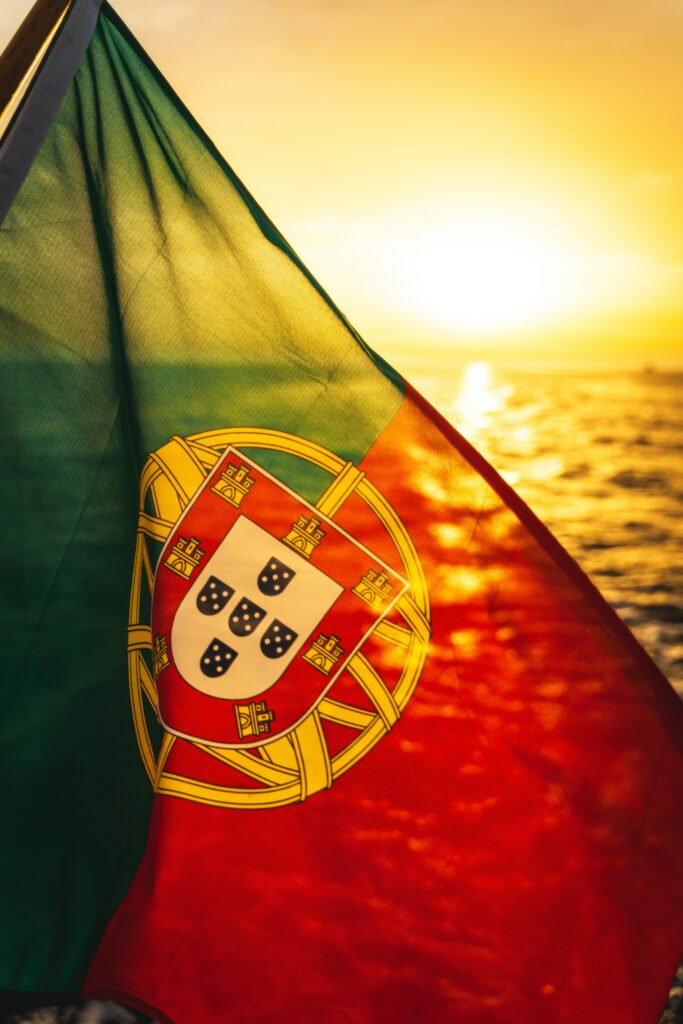
Photo: David Becker_Unsplash