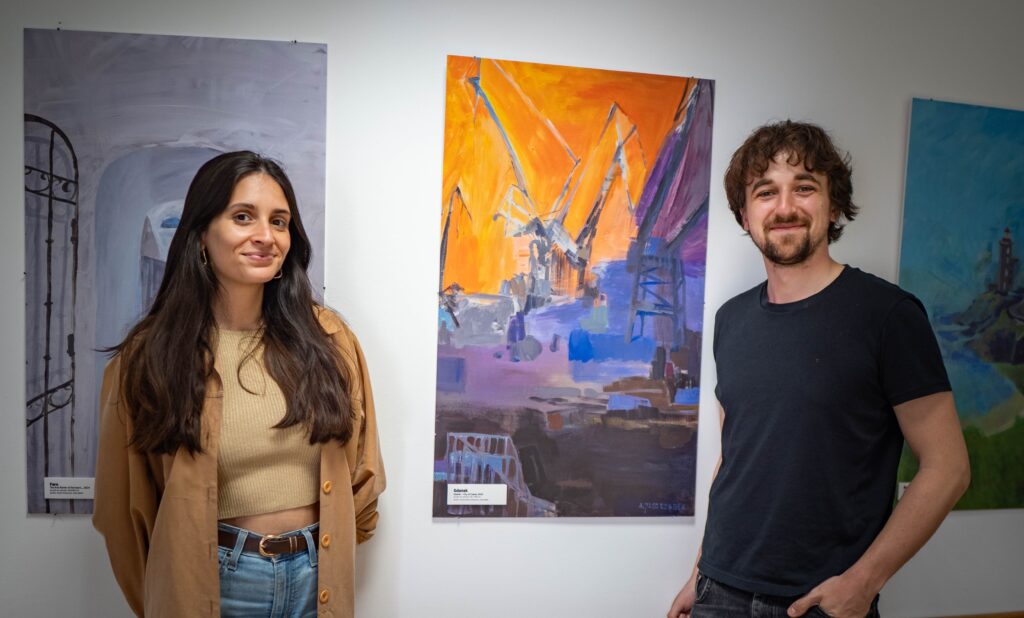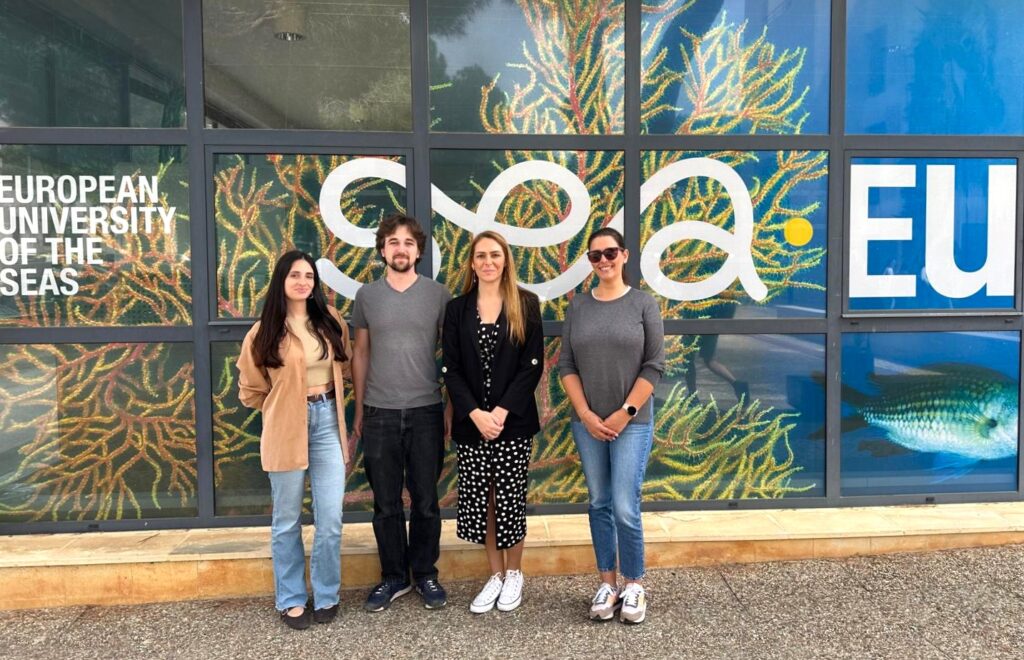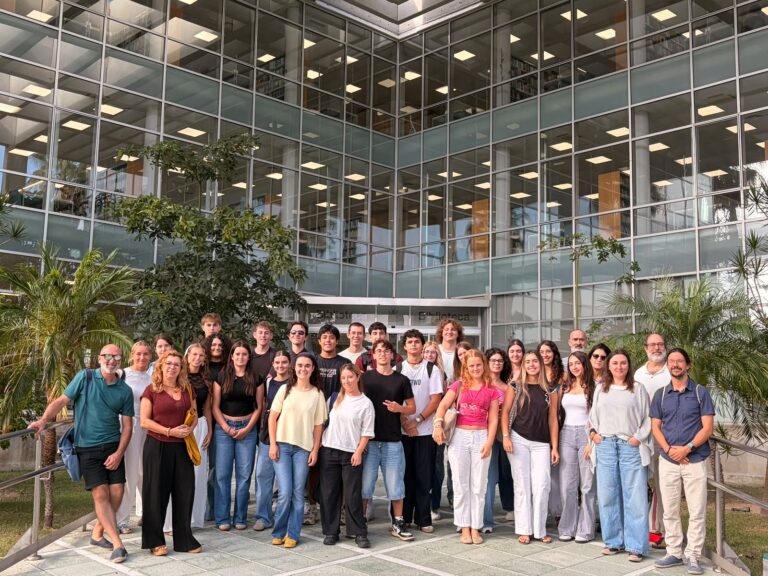
In mid-April, the University of Algarve welcomed Marcel Jakubowski, Communication Officer at the University of Gdańsk, for a job shadowing visit to the UAlg SEA-EU Office.
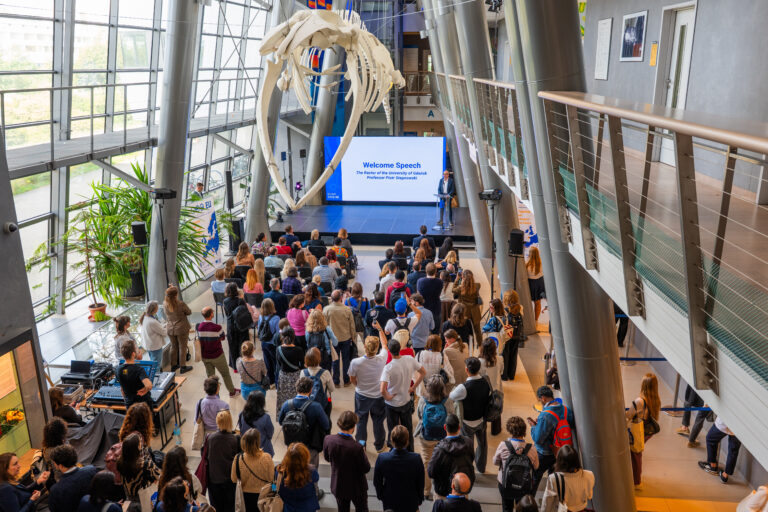
The visit followed the SEA-EU Communication Task 6.2 in-person meeting, held at UAlg on 14 and 15 April, which brought together communication officers from across the nine partner universities.
Marcel stayed on for three additional days — an opportunity to move beyond formal discussions and gain a deeper, hands-on understanding of how the SEA-EU Office operates at UAlg, in close connection with the University’s Communications Office and the International Relations and Mobility Office.
More than a professional exchange, the visit became a space for sharing perspectives, approaches and working cultures — highlighting the often intangible value of collaboration within the Alliance.
Below, both colleagues reflect on this experience — in their own words.
When Screens Give Way to Real Life: From the Baltic to the Atlantic — Three Days of Job Shadowing at UAlg
— Joana Rodrigues, Communication Officer, SEA-EU Office at the University of Algarve
For over a year, Marcel Jakubowski and I have shared the same bi-weekly Teams call — exchanging updates, aligning strategies, and occasionally laughing at the chaos of day-to-day work. But until mid-April, we had never actually met. He was a face on a screen. I was a name at the bottom of an email. Then he landed in Faro — first for the SEA-EU Communication Task 6.2 in-person meeting, and then for three additional days of job shadowing at the UAlg SEA-EU Office.
Hosting a colleague while keeping up with the daily rhythm of the SEA-EU Office at UAlg is never straightforward. Finding the right balance between ongoing tasks and providing a meaningful, immersive experience was a challenge — but one that proved entirely worthwhile.
Over the course of his visit, Marcel gained a genuine understanding of how things work here — from the inner workings of UAlg’s Communications Office and its workflows, to the International Relations and Mobility Office, and the SEA-EU Office itself, and how it connects with the wider university ecosystem. We exchanged ideas on digital content — from Instagram Reels to photography and video storytelling — as well as content planning, event organisation, and the cross-departmental collaboration that makes or breaks a communications team.
We also worked side by side. Together, we filmed a series of Reels on Multilingualism and the VTLE — SEA-EU’s Virtual Tandem Language Exchange — projects that are close to both our work and the Alliance’s mission.
One of the highlights of his visit was more ceremonial. On 17 April, Marcel joined me at the solemn ceremony in which the University of Algarve awarded honorary doctorates to archaeologist José D’Encarnação and landscape architect Fernando Santos Pessoa, held at the Grand Auditorium of Caixa Geral de Depósitos on the Gambelas Campus. It was a proud moment for UAlg — and a meaningful one to share with a colleague from across the Alliance.
What stood out most, however, was the exchange itself. Marcel brought a creative, dynamic approach and a natural instinct for communication that made every interaction engaging. I found myself gaining new perspectives, questioning routines, and rethinking approaches — but also being reminded to trust my instincts and recognise the value of the work we do every day.
Beyond the professional dimension, this visit also marked a shift in how we see each other as colleagues. Moving from shared screens to shared spaces allowed for a deeper understanding of each other’s work, pace, and sensitivities. It added a human layer to our collaboration that simply cannot be replicated online.
As Marcel left with a smile on his face, it felt clear that this exchange had achieved something meaningful. And in the end, that is what matters most.
We came into this week as colleagues who shared a screen. We leave it as colleagues who share something more — a real understanding of each other’s realities, creative sensibilities, and the particular blend of passion and pragmatism that this work demands.
That is, perhaps, exactly what SEA-EU is about: turning collaboration into connection.
How to quantify a job-shadow? My three lessons from three days spent at the University of Algarve
— Marcel Jakubowski, Communication Officer, SEA-EU Office at the University of Gdańsk
There are aspects of European Universities Initiative that are often hard to quantify. We use KPIs, milestones, deliverables and many other metrics, that are great for keeping track of the project’s progress, but they also leave other things out. One type of such unmeasurable activity is the best practice exchange. It’s tricky to measure something as abstract as the value of social interaction and networking in an international context.
As a communication officer, I often promote SEA-EU initiatives as a great platform to exchange best practices, but I’ve never really understood the true value of this process – until I visited the University of Algarve’s SEA-EU Office for job shadowing.
The Portuguese way
One of the most crucial takeaways from my visit to Algarve was learning the Portuguese way. The Head of International Relations and Mobility Office & SEA-EU 2.0 Local Manager Marleni Azevedo introduced me to this concept, but I also noticed it in every part of my visit. The Portuguese way is based on finding the most important thing to do at the moment, seeking connections and being flexible and creative when it comes to finding solutions. The opposite of this concept would be to plan everything ahead and stick to the plan no matter what.
This approach allows my UAlg colleagues to be ready for new opportunities and keep an open mind. I was impressed by seeing this concept in action – either by speaking with Hélder Rodrigues, a video professional, who often find creative ways to create and reuse content, or speaking with Marleni, who constantly looks for an opportunity to connect foreign scientists with the right professors at the University of Algarve, or seeing the whole Communications Office working as a unit, focusing together on the most crucial tasks at hand.
The SEA-EU Office is the heart of UAlg
On my first day at UAlg I entered the building with SEA-EU stickers covering the glass doors and windows, I walked up the stairs and passed a big SEA-EU logo next to the Vice-rectors’ Office, and a conference room full of paintings of SEA-EU cities. I entered the office full of photos from the first Oceanographic cruise, and sat down behind my desk. I wasn’t even 1% into my job shadowing, when it became clear to me just how important SEA-EU is to the University of Algarve.
If that wasn’t enough, in the next two hours I had the opportunity to meet half of the Vice-Rectors and Pro-Rectors team, as they all had something to discuss with either Milene or Joana. The ubiquitous branding wasn’t just for show, the SEA-EU Office really is an integral part of the Rectorate and the University.
The focus on sustainability
In the end I don’t know what was a better learning experience for me – our differences or our similarities. I learnt a lot from Joana and Milene just by talking about our everyday responsibilities, what we do the same, what we do differently and why. But the thing I was most impressed by was the sustainable initiatives organised by UAlg’s SEA-EU Office. Especially the Second-life initiative, which I helped prepare.
Second-life initiative is a simple concept with a strong message. Twice a year UAlg’s SEA-EU Office puts out boxes all over the campus to collect used items from the community. It can be clothes, appliances or maybe books. After a month the Office collects the now full boxes and sifts through the donations. – Not everything people give can have a second life, so we throw out the ones beyond-repair – says Joana Pineheiro. Then the real fun stuff happens – SEA-EU Office prepares a stand where people can take the donated items for free, provided that they can give them a “second life”. Sustainable? Yes. Community-driven? Yes. One of the best initiatives I’ve seen integrated into SEA-EU? I think you can guess the answer.
The Value Beyond KPIs
All the above lessons and knowledge are the effect of the so called „best practice exchange”, but in the end they’ll stay under the radar of the quantifiable effects of our project. My visit will be registered in one of mobility KPIs, but that’s it. We won’t be able to describe the value of my mobility and others like it. The best practices change hands, but no one sees it, although the effects may be visible soon. Whether by me adopting the Portuguese way into my Polish workflow, making SEA-EU more visible at my university or by launching a new sustainable initiative inspired by the ones from UAlg’s SEA-EU Office.
In the end none of these lessons would be possible without Milene Lança and especially Joana Pinheiro, who gave their 110% to welcome and show me around the university. The knowledge I gained just by interacting with them would warrant another news piece – but in the end these lessons must become one of those unquantifiable but utmost valuable things that we experience so very often in SEA-EU.