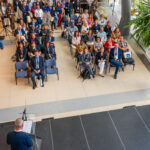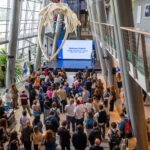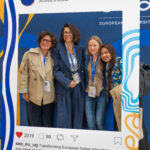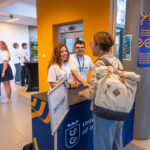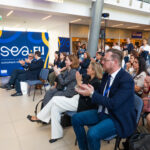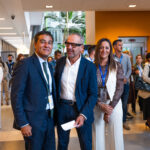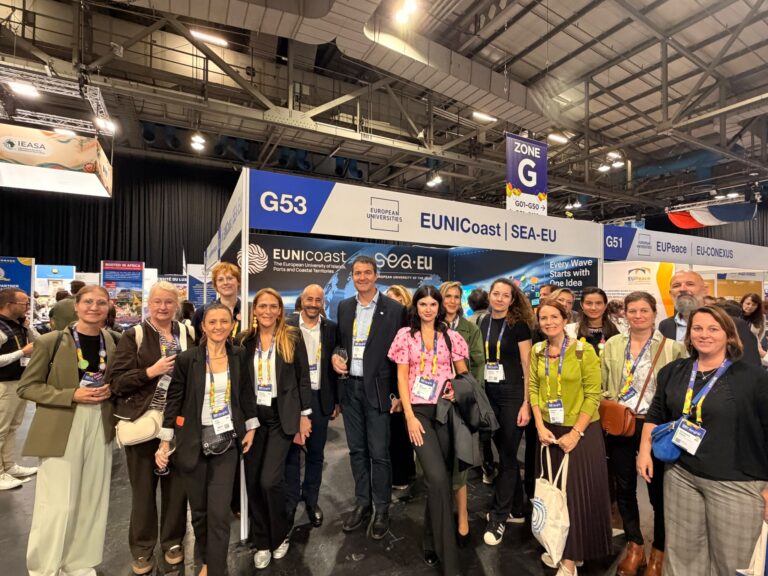
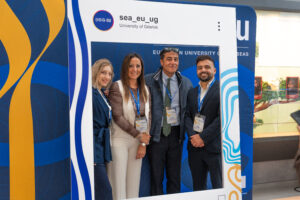
 Nearly 300 participants from across Europe have travelled to the University of Gdańsk to discuss research and educational initiatives that bring together the coastal universities of the SEA-EU alliance. The Being SEA-EU conference addresses the key challenges facing coastal regions, as well as best practices in educational and research collaboration amongst the nine partner universities.
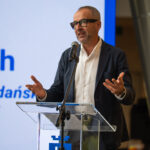
‘The program takes us into climate and coastal research, health, biotechnology, digital education, green finance, and blue economy – a very good reflection of the breadth of our alliance,’ opened the event Rector of the University of Gdańsk prof. dr hab. Piotr Stepnowski. ‘I hope that we will use this time for open and honest discussion while also enjoying one another’s company, strengthening our friendships, and developing new plans for the years ahead. Welcome to Gdańsk. Welcome to the University of Gdańsk. I wish you an absolutely wonderful conference.’
The conference provides a forum for academic exchange and for summarising the SEA-EU alliance’s achievements in recent years. Across five thematic panels, scientists will discuss research collaboration, institutional changes and educational initiatives that have emerged thanks to SEA-EU.
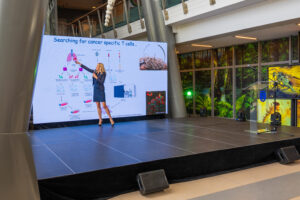 During the opening ceremony, the research achievements of the University of Gdańsk’s International Research Agendas were also presented by representatives from both units.
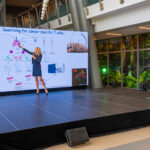
The Director of the International Centre for Cancer Vaccine Science (ICCVS), prof. Natalia Marek-Trzonkowska, spoke about work on personalised cell therapy. Key partners of the ICCVS include the University of Edinburgh and Leiden University Medical Centre. Between 2020 and 2023, the ICCVS filed as many as six patent applications, three of which were granted patent protection.
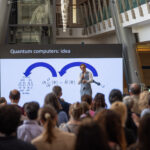
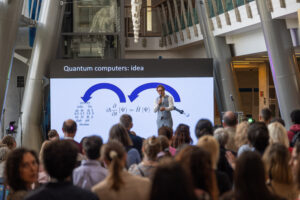 Dr hab. Marcin Pawłowski, prof. UG from the International Centre for Theory of Quantum Technologies (ICTQT) introduced participants to the concept of a quantum computer. He outlined the limitations of classical computers, which are overcome by a device based on the principles of quantum mechanics. Research into new quantum technologies is one of the ICTQT’s main missions, which the centre has been pursuing since 2018.
Following the official opening of the event, participants took part in two panel discussions on climate change and language teaching. This was the first of over 100 presentations that will take place as part of the conference over the next three days.