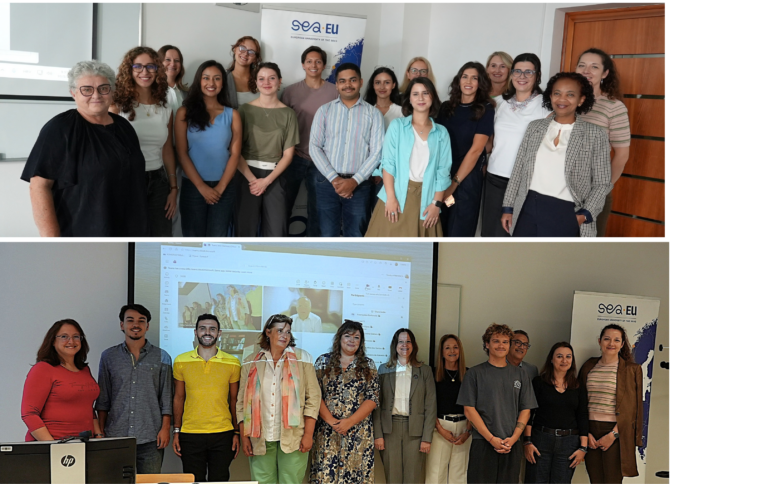
DEEPMINE-SUB is one of the winning projects of the 2026 UAlg/SEA-EU Collaborative Research Initiation Competition (Seed Fund). Led by Caio Ribeiro, a researcher at the University of Algarve’s Centre of Marine Sciences (CCMAR), the project has been awarded €3,000 to investigate the potential effects of metal releases associated with deep-sea mining.
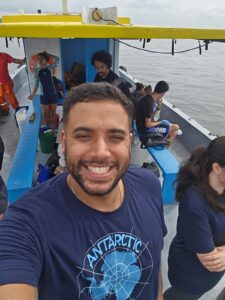
An oceanographer with a Master’s degree in Marine Biology and a PhD in Oceanography, Caio Ribeiro is an Assistant Researcher at CCMAR, where he is a member of the Ecotoxicology and Chemical Oceanography (ECHO) research group. He is also a Visiting Lecturer at UAlg, teaching on the Master’s degree in Marine Biology and the Bachelor’s degree in Coastal and Marine Systems.
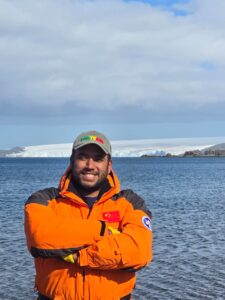
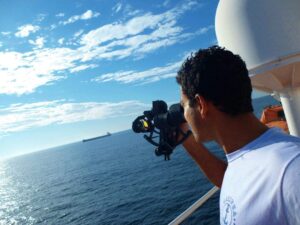
His research focuses primarily on chemical oceanography, marine ecotoxicology and biogeochemistry. According to the researcher, throughout his career he has sought to understand how different contaminants are transported through the marine environment, taken up by organisms and capable of producing biological effects. In recent years, he has devoted particular attention to polar and deep-sea environments and the potential environmental impacts of deep-sea mining.
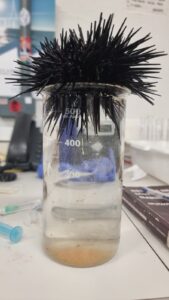
DEEPMINE-SUB emerged within this context and will investigate the subcellular fate of metals potentially released during mining activities on the ocean floor. As Caio Ribeiro explains, the aim “is to understand not only whether these metals accumulate in sentinel marine organisms, but also in which parts of the cells they are retained and whether they are stored relatively safely or remain associated with more sensitive cellular components”.
According to the researcher, this approach will make it possible “to distinguish the simple accumulation of a metal from its actual potential to cause toxicity”. To achieve this, the project will combine ecotoxicological tests, chemical analyses and subcellular fractionation techniques, establishing a link between exposure, bioaccumulation and biological effects.
From the ocean floor to the inside of cells
Deep-sea mining may release particles and metals into the water column, forming plumes capable of reaching areas beyond the sites being directly exploited. Despite growing economic interest in this activity, considerable uncertainty remains regarding the behaviour of these metals and their effects on marine organisms. DEEPMINE-SUB seeks to address precisely this knowledge gap.
According to Caio Ribeiro, much of the existing research assesses only the total concentration of metals accumulated in organisms. However, “this information does not allow us to determine whether the metal has been safely immobilised or remains biologically available and capable of causing harm”, he explains. By studying the fate of metals within cells, the project aims to contribute to a more realistic environmental risk assessment.
Collaboration between Portugal, Spain and Brazil
The project brings together complementary expertise from the University of Algarve; the University of Cádiz, which, together with UAlg and seven other universities, is a member of the European University of the Seas Alliance — SEA-EU; and Rio de Janeiro State University, one of the Alliance’s global external partners.
CCMAR/UAlg will conduct the exposure experiments, assess the ecotoxicological responses and carry out part of the chemical and biological characterisation. Rio de Janeiro State University will contribute its expertise in oceanography and biogeochemistry, while the University of Cádiz will provide expertise in marine contamination and the analysis of the subcellular distribution of metals.
According to the researcher, the three institutions will also collaborate on experimental planning, the interpretation of results, the training of early-career researchers and the preparation of scientific publications. This collaboration will therefore strengthen scientific links between Portugal, Spain and Brazil.
In terms of impact, the results may help to identify suitable biomarkers and sentinel organisms for future environmental monitoring programmes. In Caio Ribeiro’s view, the project may also provide scientific evidence to inform impact assessments, environmental protection measures and decisions concerning an activity that remains surrounded by uncertainty.
“Before moving towards the large-scale exploitation of mineral resources from the deep ocean, we need to understand more fully the potential effects on ecosystems that are vulnerable, poorly understood and, in many cases, extremely slow to recover,” he stresses.
A first step towards more ambitious projects
The Seed Fund support will make it possible to conduct the initial experiments, acquire the necessary materials, promote mobility between the teams and generate preliminary data. Caio Ribeiro explains that these initial results will be important for “testing the methodology, training students and early-career researchers, and preparing applications for larger national and international funding programmes”.
Although this is initial funding, the researcher believes that the Seed Fund may have “a multiplier effect”, laying the foundations for a long-term joint research programme involving the three institutions.
Promoted by the University of Algarve within the framework of the SEA-EU Alliance, the Collaborative Research Initiation Competition aims to encourage UAlg researchers to establish new partnerships with researchers from the other SEA-EU universities and the Alliance’s external partners.
For Caio Ribeiro, being one of the winners of the 2026 edition represents not only recognition of a scientific idea in which he believes, but also an opportunity to bring together institutions connected to his academic and professional journey. He also highlights the importance of supporting early-stage projects, noting that many significant scientific collaborations begin with a small-scale experiment, an initial mobility opportunity or a preliminary dataset.
“This support gives us the opportunity to take the first step along that path and build something more ambitious for the future,” he concludes.